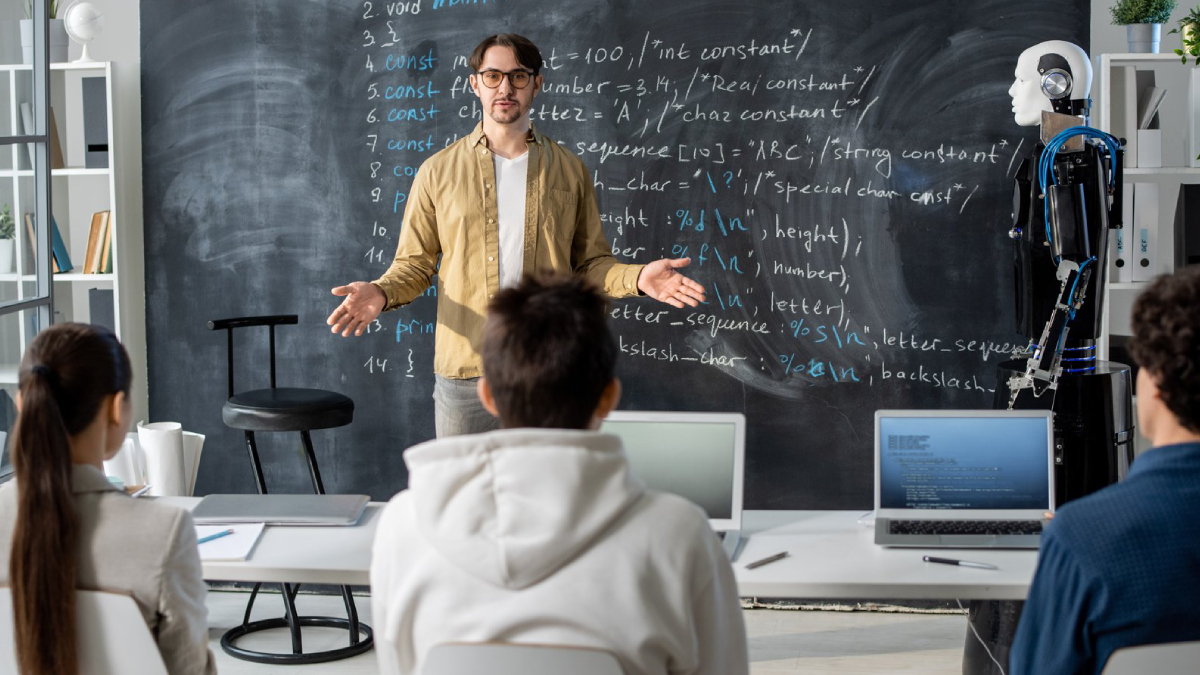
In 2026, education is going through a massive transformation. Traditional classrooms are evolving into smart, digital, and AI-powered learning environments. Artificial Intelligence (AI) is no longer just a supporting tool—it is becoming a core part of modern education systems worldwide.
From personalized learning to AI tutors, virtual classrooms, and automated grading systems, education is becoming more intelligent, flexible, and accessible.
In this blog, we’ll explore the top AI trends in modern education, how they are shaping the future, and what students and teachers can expect next.
What Are AI Trends in Education?
AI trends in education refer to the latest developments and innovations where artificial intelligence is used to improve:
- Teaching methods
- Learning experiences
- Student performance tracking
- Administrative tasks
- Educational content delivery
These trends are shaping the future of how knowledge is delivered and consumed.
1. Personalized Learning Systems
One of the biggest trends in modern education is personalized learning powered by AI.
AI systems analyze:
- Student performance
- Learning speed
- Weak and strong areas
- Study behavior
Then they create customized learning paths for each student.
Result:
- Every student learns at their own pace
- Better understanding of topics
- Improved academic performance
This is replacing the traditional “one-size-fits-all” education model.
2. AI-Powered Virtual Classrooms
Virtual classrooms are becoming smarter with AI integration.
AI helps by:
- Managing attendance automatically
- Tracking student engagement
- Recording and summarizing lectures
- Translating lessons in real time
Result:
- Better online learning experience
- Improved student participation
- More organized virtual education
This trend is especially important for remote and global education.
3. AI Tutors and Learning Assistants
AI tutors are becoming common in modern education systems.
They can:
- Explain complex topics
- Answer student questions instantly
- Provide step-by-step solutions
- Offer practice exercises
Tools like ChatGPT are widely used as learning companions.
Result:
- 24/7 learning support
- Faster problem-solving
- Reduced dependency on human tutors
4. Automated Grading Systems
AI is making grading faster and more efficient.
It can:
- Evaluate multiple-choice tests
- Check essays and assignments
- Provide instant feedback
- Detect plagiarism
Result:
- Saves teachers’ time
- Faster result processing
- More consistent grading
This allows teachers to focus more on teaching rather than administrative work.
5. AI in Smart Content Creation
Educational content is now being generated with AI tools.
AI helps:
- Create lesson plans
- Generate study material
- Summarize textbooks
- Design quizzes and tests
Result:
- Faster content preparation
- Updated learning material
- Better teaching efficiency
6. AI in Student Performance Analytics
AI is helping teachers understand student performance in detail.
It tracks:
- Test scores
- Attendance
- Participation levels
- Learning progress
Result:
- Early detection of weak students
- Personalized support
- Better academic outcomes
7. AI in Language Translation and Accessibility
AI is breaking language barriers in education.
It can:
- Translate lectures in real time
- Convert textbooks into multiple languages
- Assist students with disabilities
Result:
- Global access to education
- Inclusive learning environment
- Better understanding for non-native speakers
8. AI-Powered Adaptive Learning Platforms
Adaptive learning platforms adjust content based on student progress.
They:
- Increase difficulty when students improve
- Simplify topics when students struggle
- Provide personalized practice
Result:
- Efficient learning process
- Better knowledge retention
- Continuous improvement
9. AI in Exam Preparation Systems
Exam preparation is becoming smarter with AI.
AI helps by:
- Creating mock exams
- Predicting important questions
- Tracking performance
- Suggesting revision plans
Result:
- Better exam readiness
- Higher confidence
- Improved results
10. AI in Administrative Education Tasks
AI is also improving school and university administration.
It helps:
- Manage admissions
- Organize student records
- Schedule classes
- Handle communication systems
Result:
- Reduced administrative workload
- Faster operations
- More efficient institutions
Real-World Example
Imagine a modern classroom in 2026:
Before AI:
- Same lessons for all students
- Manual grading
- Slow feedback system
After AI:
- Personalized learning paths
- Instant grading and feedback
- AI tutors supporting students 24/7
Result:
- Smarter education system
- Faster learning process
- Improved student success rates
Benefits of AI Trends in Education
1. Personalized Learning
Each student gets a custom learning experience.
2. Faster Education System
Learning and grading become quicker.
3. Better Accessibility
Education becomes global and inclusive.
4. Improved Teaching Efficiency
Teachers can focus more on teaching.
5. Smarter Learning Tools
Students learn in more interactive ways.
Challenges of AI in Education
1. Overdependence on AI
Students may rely too much on technology.
2. Data Privacy Concerns
Student data must be protected carefully.
3. Digital Inequality
Not all students have equal access to AI tools.
4. Reduced Human Interaction
Less face-to-face learning experience.
Future of AI in Education
The future of education will include:
- Fully AI-powered schools
- Virtual reality classrooms
- AI personal tutors for every student
- Global digital learning networks
- Fully adaptive education systems
Education will become more intelligent, interactive, and personalized.
Conclusion
AI is revolutionizing modern education by introducing personalized learning, smart classrooms, AI tutors, and automated systems. These trends are making education faster, more accessible, and more effective.
However, human teachers will still play a key role in guiding, mentoring, and inspiring students alongside AI systems.