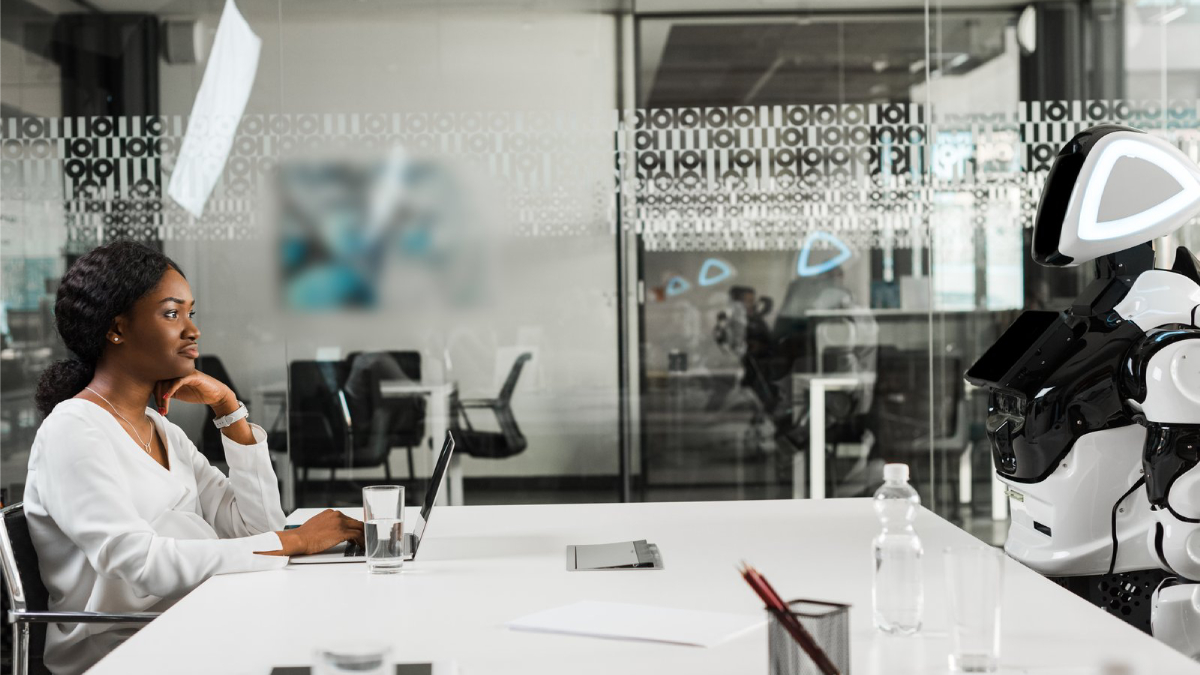
In 2026, workplaces are changing faster than ever before. Companies are no longer relying only on traditional methods to manage tasks, communication, and performance. Instead, Artificial Intelligence (AI) has become a core part of modern workplaces, helping teams work faster, smarter, and more efficiently.
From automating repetitive tasks to improving decision-making and communication, AI is transforming how people work every day.
In this blog, we’ll explore how AI improves workplace productivity, real-world applications, benefits, and challenges.
What is Workplace Productivity?
Workplace productivity refers to how efficiently employees complete tasks and achieve goals within a given time.
Higher productivity means:
- More work completed in less time
- Better quality output
- Efficient use of resources
- Improved teamwork
AI helps improve all of these areas by automating and optimizing work processes.
Why AI is Important for Workplace Productivity
AI is becoming essential in modern workplaces because it:
- Reduces manual workload
- Automates repetitive tasks
- Improves decision-making
- Enhances communication
- Saves time and resources
1. AI Automates Repetitive Tasks
One of the biggest productivity benefits of AI is automation.
AI can handle tasks such as:
- Data entry
- Email sorting
- Report generation
- Scheduling meetings
- File organization
Example:
Instead of manually sorting hundreds of emails, AI tools automatically categorize and prioritize them.
Result:
- Employees focus on important tasks
- Less time wasted on repetitive work
- Increased efficiency
2. AI Improves Communication
Communication is a key part of workplace productivity.
AI helps by:
- Translating messages in real time
- Summarizing long emails
- Suggesting replies
- Improving writing clarity
Tools like Microsoft Copilot help teams communicate more effectively inside Office apps.
Result:
- Faster communication
- Fewer misunderstandings
- Better collaboration
3. AI Enhances Task Management
AI-powered productivity tools help employees organize and prioritize tasks.
They can:
- Suggest daily schedules
- Set automatic reminders
- Prioritize urgent tasks
- Track progress
Tools like Todoist use AI to improve task planning.
Result:
- Better time management
- Reduced stress
- Clear task structure
4. AI Improves Decision-Making
AI helps businesses make smarter decisions by analyzing large amounts of data.
It can:
- Identify trends
- Predict outcomes
- Suggest strategies
- Analyze performance data
Example:
A company can use AI to predict which products will sell best next month.
Result:
- Faster decisions
- Data-driven strategies
- Reduced risk
5. AI Boosts Content Creation Productivity
In modern workplaces, content creation is a major task.
AI helps by:
- Writing reports
- Creating presentations
- Generating marketing copy
- Drafting emails
Tools like ChatGPT help employees generate content quickly and efficiently.
Result:
- Faster content production
- Less workload for teams
- Higher output quality
6. AI Improves Collaboration in Teams
AI tools improve teamwork by enabling smoother collaboration.
They help with:
- Real-time document editing
- Task sharing
- Progress tracking
- Automated updates
Tools like ClickUp support team collaboration with AI-powered workflows.
Result:
- Better teamwork
- Improved transparency
- Faster project completion
7. AI Reduces Human Error
Human errors can slow down productivity.
AI helps by:
- Detecting mistakes in documents
- Correcting calculations
- Validating data
- Monitoring workflow accuracy
Result:
- More accurate work
- Fewer mistakes
- Higher reliability
8. AI Helps in Time Management
Time management is one of the biggest productivity challenges.
AI improves it by:
- Scheduling tasks automatically
- Blocking distractions
- Optimizing work hours
- Sending smart reminders
Result:
- Better focus
- Efficient use of time
- Higher daily output
9. AI Supports Remote Work Efficiency
With remote work becoming common, AI plays a key role.
It helps remote teams with:
- Virtual meeting summaries
- Automated attendance tracking
- Cloud collaboration tools
- Instant communication support
Result:
- Smooth remote workflows
- Better coordination
- Increased productivity
Real-World Example
Imagine a digital marketing company:
Before AI:
- Manual reporting takes hours
- Teams struggle with task tracking
- Communication delays occur
After AI:
- Reports are generated automatically
- Tasks are organized intelligently
- Communication is instant and clear
Result:
- 3x productivity increase
- Faster project delivery
- Reduced workload stress
Benefits of AI in Workplace Productivity
1. Saves Time
Automates repetitive and time-consuming tasks.
2. Improves Efficiency
Employees complete more work in less time.
3. Enhances Accuracy
Reduces human errors in tasks.
4. Better Collaboration
Improves teamwork and communication.
5. Smarter Decisions
Data-driven insights improve planning.
Challenges of AI in Workplace Productivity
1. Over-Reliance on AI
Too much automation can reduce human involvement.
2. Learning Curve
Employees need time to adapt to new tools.
3. Data Security Risks
Sensitive workplace data must be protected.
4. Job Role Changes
Some tasks may be automated, changing job responsibilities.
Future of AI in Workplace Productivity
The future workplace will include:
- Fully AI-managed workflows
- Smart virtual assistants for every employee
- Real-time productivity tracking systems
- Predictive work scheduling
- AI-driven decision support systems
Work will become more automated, efficient, and intelligent.
Conclusion
AI is revolutionizing workplace productivity by automating tasks, improving communication, enhancing decision-making, and optimizing workflows. From tools like ChatGPT and Microsoft Copilot to Todoist and ClickUp, AI is helping employees and businesses work smarter every day.
Companies that embrace AI today will lead the future of high-performance workplaces.